
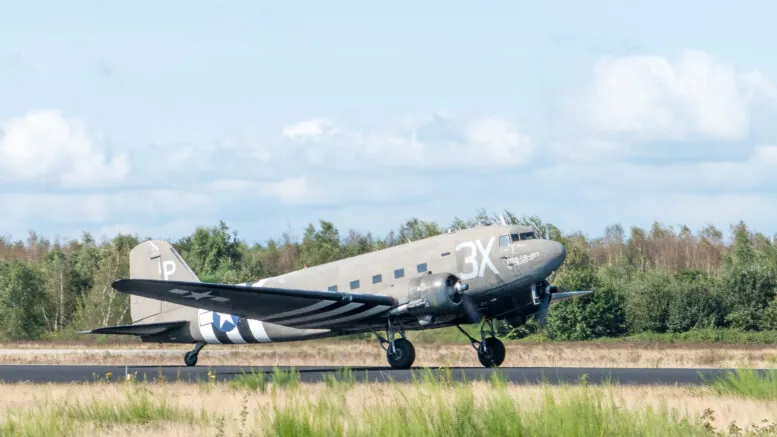
Military cargo planes transformed slow, uncertain logistics into fast, reliable worldwide mobility. The Lockheed C-130 Hercules was versatile, and the Lockheed C-5 Galaxy could carry massive payloads. The Boeing C-17 Globemaster III brought both together, redefining what was possible. Today, they are used to support combat, disaster relief, and to meet the demands of global supply chains. Military cargo planes have made anything possible.
For many years, when help, supplies, or people were needed somewhere urgently, getting them there felt slow. Things were overcomplicated, and the outlook was uncertain. This was the reality of logistics, especially during times of war or global crises. Not being able to move massive amounts of cargo quickly didn’t just delay missions; it cost opportunities and even lives.
As aviation evolved, this problem demanded a better solution. Aircraft needed to be capable of carrying more, going farther, and landing almost anywhere. The solution showed up in the form of military cargo planes. Let’s take a look at how they changed aviation logistics.
Enter the Modern Airlift
Looking back through aviation history, it is clear that there was never a focus on logistics. Rather, the priorities of early aircraft were speed, combat, or reconnaissance abilities. But, as global conflicts expanded, so did the need to transport troops and supplies. Even if they could reach their destination, the efficiency just wasn’t there.
Then, World War II happened. Military planners began to realize that future success didn’t just depend on strength and firepower, but also on mobility. This led to the development of dedicated cargo aircraft designed from scratch with the intention to carry heavy loads and operate in unpredictable, albeit dangerous, environments.
History was in the making.
The Douglas C-47 Skytrain
Before modern airlift became what it is today, there was an aircraft that quietly laid the foundation for everything that followed: the C-47 Skytrain. First introduced during World War II, this aircraft proved that reliable, large-scale aerial logistics was not only possible, but essential.
At a time when moving troops and supplies quickly could determine the outcome of entire campaigns, the C-47 delivered. It was rugged, dependable, and capable of operating in harsh and unpredictable conditions. Whether transporting cargo across long distances or deploying paratroopers behind enemy lines, it consistently performed when it mattered most.
What truly set the C-47 apart was its versatility. It could carry troops, medical supplies, equipment, and even evacuate wounded soldiers. During pivotal moments like the Allied invasion of Normandy, fleets of these aircraft filled the skies, demonstrating the power of coordinated air mobility on a massive scale.
The Lockheed C-130 Hercules
First flown in 1954, the Lockheed C-130 Hercules changed aviation logistics. It was designed to operate almost anywhere while carrying large payloads. This was something unheard of at this time.
So, what made the C-130 so transformative? It wasn’t just its size, but its versatility. It could land on short, unpaved runways. It could deliver supplies straight into combat zones. And it could even perform airdrops with precision. What an impact this aircraft had throughout history.
Over the years, the C-130 has been used in combat missions and to deliver humanitarian relief, entering conflicts from Vietnam to modern-day operations around the globe. Its ability to adapt to different scenarios is likely what has made it so essential for decades. There is no denying that this aircraft set the standard.
The Lockheed C-5 Galaxy
With the expansion of global operations, a military aircraft was needed that could move what seemed impossible. Tanks, helicopters, and entire units needed to be transported from one end of the world to the other without stopping. What could handle such an enormous task?
The Lockheed C-5 Galaxy.
First flown in the late 1960s, the C-5 aircraft was large and capable. It was designed for strategic airlift. And while it could transport all of these really big things, what really set it apart was its capacity. With payloads exceeding 100 tons, it became one of the largest and most powerful military aircraft ever built. Its unique design, which included front and rear cargo doors, allowed for quick loading and unloading, boosting turnaround times.
When it comes to logistics, the C-5 changed what was possible. No cargo was too big, and no destination was out of reach.
The Boeing C-17 Globemaster III
A modern airlift that was introduced in the 1990s, the Boeing C-17 Globemaster III strongly focused on flexibility. And as it entered service, it quickly became known as one of the most versatile cargo aircraft ever built. For instance, it could carry heavy loads of up to about 170,000 pounds while still landing on short, underdeveloped airstrips.
Aviation enthusiasts have often said that the C-17 bridged the gap between the previous aircraft. It could perform long-range missions like the C-5, but also operate in rugged locations like the C-130. In other words, it offered the best of both worlds and changed logistics. Instead of relying on multiple aircraft for different phases of a mission, the C-17 could do everything.
With the ability to streamline operations and reduce complex logistics issues, the C-17 has become the global standard for air mobility.
The Impact of Military Cargo Planes
Military cargo planes have seen their fair share of war and combat, alongside more iconic military planes, but their importance extends far beyond the battlefield. They play a crucial role in disaster relief, humanitarian aid, and global supply chains.
When earthquakes devastate regions or hurricanes strike, for instance, it is often these military cargo planes that respond first. They can move fast, carry large loads, and operate in challenging environments.
Time and time again, we have seen how aircraft capability can mean the difference between immediate action and delayed relief. A difference that matters most in moments of crisis.
Experience Aviation History Up Close
When you think about it, these aircraft are not just machines. They are milestones in human innovation. They tell a story about how we have overcome some of the world’s greatest challenges: swiftly and dependably moving people, equipment, and resources across great distances.
At Wings Over Camarillo, we feel it is so important to keep this part of history alive. You get to see the aircraft up close, learn about their stories, and appreciate the role they played in carving a path from yesterday to tomorrow.
Don’t miss this opportunity to experience the legacy of military aviation firsthand at the Wings Over Camarillo airshow scheduled for August 15th and 16th, 2026. Tickets will be on sale soon, so save the date!
Ready to Soar with Us?