Harriet Quimby was a courageous aviation pioneer whose story is often overlooked. As the first American woman to earn a pilot’s license and fly solo across the English Channel, she deserves recognition. After all, her fearless skill and independence helped shape aviation history into what it is today. She proved that women belonged in the cockpit and inspired many generations to dream of soaring high along the way.

Aviation history tends to celebrate some names boldly and loudly while allowing others to drift away, out of sight. But, when it comes to gaining an understanding of how flight truly evolved, you need to know about those who left a mark, like Harriet Quimby. Her story is rarely told, and her courage forgotten. So, it is time to change that.
This article gives you a glimpse of Harriet Quimby and her journey that proved that the sky belongs to everyone.
Before Taking Flight
It takes a courageous person to make a mark in history. And for Harriet Quimby, it started long before she ever sat in a cockpit. She was born in 1875 and built a successful career as a journalist, screenwriter, and photographer—all during a time when women were often discouraged from doing so. She even traveled on her own in the early 1900s when it was considered a radical decision for a woman.
So, when this highly independent woman finally discovered flying, she saw possibility before she ever saw danger. Remember—at this time, airplanes were still in the experimental phase. They were not reliable, and they surely were not viewed as a means of transportation.
Nonetheless, Quimby knew they were the future, and she wanted to be a part of it.
The First Licensed American Female Pilot
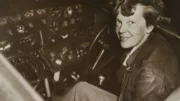
In the early part of the century, the Moisant Aviation School, founded by John Moisant, was one of the few places within the United States that allowed civilians to learn how to fly. Harriet Quimby attended and earned her pilot’s license in 1911. She was the first American woman to do so.
no standardized training programs and no advanced safety systems. Cockpits were open-air, and instruments were very limited. Pilots during these early days had to really feel the aircraft. The engines required constant attention. Quimby had to listen for sounds and follow her instinct rather than the gauges. And she did it well.
Keep in mind that there were
Flying With Skill—and Style
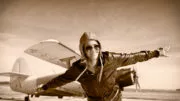
There is no denying that Harriet Quimby is not one to try to fit in. She thrived in paving her own path and making sure we all knew about it. This is why it was never a surprise when she would show up in her violet satin flight suit. It was not about fashion; it was about getting people to see her flying. And, they did.
Known for performing at airshows throughout the U.S. and performing moves that require precision and courage, Quimby had incredible skill. She didn’t hesitate to fly the same aircraft as her male peers, as special treatment was not something she was after. Rather, she wanted equal recognition.
Crossing the English Channel Solo
A flight across the English Channel is what officially put Quimby’s name on record. It was 1912, and many pilots wouldn’t think about taking this solo flight. Yet, she became the first woman to do so when she flew a Bleriot monoplane from England to France.
It was a dangerous feat. Navigation was lacking, leaving her to rely only on basic compasses and visual references. Weather forecasts were not reliable, either. And engines were known to go kaput in the middle of a fight. Still, Quimby flew alone over cold water with no chance of rescue should something go awry.
She made it to the other side calmly, confidently, and without incident. Unfortunately, her timing was off. While everyone should have been celebrating Quimby’s achievement, the world was focused on the sinking of the Titanic. She never fully received the recognition she should have.
An Aviation Career Cut Short
Harriet Quimby’s outstanding career as a daring female pilot ended abruptly and tragically. In the same year that she made history, she died in an airshow accident when she was thrown from her open-air cockpit while performing a maneuver. Because safety protocols were just being developed in these early years, and parachutes were not standard, her life was lost.
For everyone who had an interest in aviation, this was a reminder of just how dangerous taking flight truly was. However, her impact is undeniable. She proved that women have a place in the cockpit and undoubtedly reshaped public perception.
History and Modern Day
So, why is it so important for us to pay attention to those who have made a historical impact in aviation, like Harriet Quimby? She may have been the first, but that wasn’t the only reason she was so important. She made it ok for girls and women to dream of becoming a pilot, and showed that for change and progress to be made, you had to be willing to take risks. And that is exactly what she did.
Now, everyone who sits down in a cockpit or dreams of one day being able to, owes a bit of gratitude to those who came before them.
Honoring Pioneers at Wings Over Camarillo
In the early 1900s, there weren’t many people willing to risk everything to test the limits of flight. Harriet Quimby saw an opportunity and latched onto it with her bold courage. Her story sparks interest and appreciation, reminding us of all the fearless individuals who were willing to push the art of flight forward to what we have today.
Does Quimby’s journey inspire you? Imagine what experiencing aviation history in person can do. Join us at the Wings Over Camarillo Air Show and rediscover these pioneers who shaped aviation. Their legacy is still soaring, just waiting for you to experience it on August 15th and 16th, 2026. Save the date!
Ready to Soar with Us?