
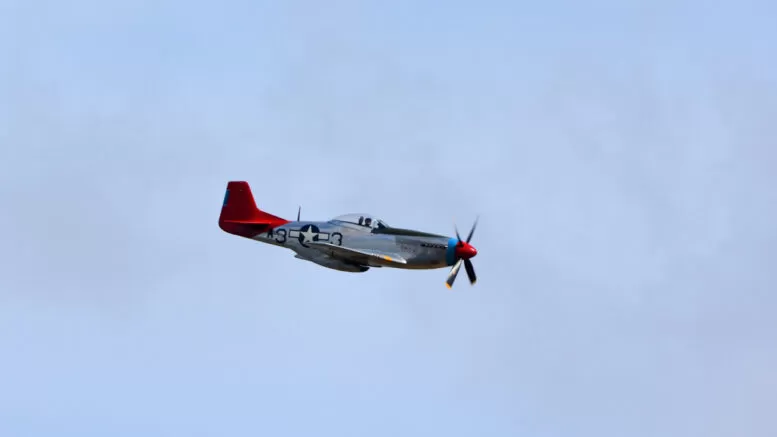
The courage of the Tuskegee Airmen is connected to the aircraft they flew, including the P-40 Warhawk, the P-39 Airacobra, the P-47 Thunderbolt, and the P-51 Mustang. The Tuskegee Airmen planes helped them complete successful combat missions and prove their skill and dedication to training. They also challenged discrimination. The achievements reached thanks to flights on these aircraft advanced aviation and social progress. Learning about them deepens appreciation of history.
We often celebrate the heroes of aviation history—those who have pushed the limits with their courage. Yet, the aircraft that carried these brave men and women high into the sky are commonly overlooked. Without understanding the machines behind the mission, we are missing out on an incredibly important and powerful part of aviation history. After all, these innovations are what made their success possible.
When it comes to the Tuskegee Airmen, for instance, we can gain a deeper appreciation of their guts and heroism when we explore the aircraft they flew and the technological progress of the time. Let’s rediscover the aircraft behind the legendary Red Tails and the role they played in our history.
The Curtiss P-40 Warhawk
Among the earliest Tuskegee Airmen planes was the Curtiss P-40 Warhawk. It was the first aircraft assigned to the 99th Fighter Squadron—the first Black flying unit in the U.S. Military. Little did they know then that we would still be talking about their incredible mark in history decades later.
The Curtiss P-40 Warhawk is a rugged yet reliable fighter aircraft, but it surely was not the fastest or most advanced of its time. It was still tough, dependable, and capable of ground-attack missions—everything that mattered most in those moments. The men used it to its full potential during early operations in North Africa and the Mediterranean.
So, why the P-40 Warhawk?
The airmen were flying into real combat conditions, and this aircraft had a strong, durable design that was ideal for such a harsh environment. It offered heavy armament for air and ground attacks, too. An aircraft in these moments needs to be reliable, and it was.
There is no denying that the P-40 allowed the Tuskegee Airmen to prove themselves and their abilities.
The Bell P-39 Airacobra
Next up is one of the most unusual of the Tuskegee Airmen planes: the Bell P-39 Airacobra. What made it so different? The design placed the engine directly behind the pilot rather than in the nose, where it had always been found. But this configuration was not done without good reason—it greatly improved maneuverability.
At the same time, the P-39 required exceptional skill to operate effectively. Some pilots found it very challenging to handle. The Tuskegee Airmen? Well, let’s just say they were able to show their high level of adaptability and mastery by regularly using the aircraft successfully in combat operations.
It wasn’t just the mid-engine configuration that made this aircraft stand out, but its strong performance in low altitudes. This is often a must-have in combat scenarios. Further, it had a cannon mounted through the propeller hub, which aided them on their missions.
To fly the Bell P-39 the way the Tuskegee Airmen did required precision and a lot of confidence. And, they did it without fail.
The Republic P-47 Thunderbolt
With the name Thunderbolt, you can already tell that this aircraft is going to pack a powerful punch. When the airmen transitioned to the Republic P-47, they were presented with the opportunity to experience a massive, powerful fighter jet known for its hardiness and durability.
The aircraft’s nickname was the “Jug,” and it became widely known as one of the heaviest fighter aircraft of the war. Just look at its qualities—strong armor protection (especially for the pilot) and exceptional firepower with eight machine guns. The ability to sustain damage while still being able to return to base took it to the next level. It’s no surprise that it became used regularly for bomber escort missions.
Many successes with the Thunderbolt continued to build the Tuskegee Airmen’s reputation, making it one of the more iconic of the Tuskegee Airmen planes.
The North American P-51 Mustang
Finally, the most famous of the Tuskegee Airmen planes is the North American P-51 Mustang. It had a very distinctive red tail, hence the iconic nickname received by the airmen—the Red Tails.
This aircraft, with the defining symbol, was fast and agile. Thanks to advanced aerodynamics, it could easily handle long-range missions and was often used to escort bombers deep into enemy territory. And, its success rates at protecting bomber crews soared.
All of their success with these jets as bomber escorts allowed the Tuskegee Airmen to become one of the most respected fighter groups of World War II.
Why The Aircraft of Yesterday Matters Today
Why should we spend time appreciating the aircraft that carried these airmen in and out of combat zones time and time again? Aside from being a military tool, they also played an instrumental role in social progress.
Each aircraft allowed these pilots to prove their skill and discipline in a time when systemic discrimination was everywhere. Their success in handling the aircraft helped change long-standing prejudices and eventually led to the desegregation of the U.S. Military.
The aircraft also contributed to advances in aviation technology, helping to shape modern aviation into what it is today.
Learning about these machines helps us see history as progress in so many different ways.
Experience Aviation History With Wings Over Camarillo
Aviation becomes so much more meaningful when it can be experienced firsthand. Can you imagine seeing historic aircraft up close? A sense of wonder can capture your attention and connect you with a legacy you will want to know more about.
The Tuskegee Airmen and their aircraft made a huge impact on history. And there are others, too. We invite you to come experience aviation history in action at the Wings Over Camarillo Airshow on August 15th and 16th, 2026. Mark your calendars and secure your tickets today. There is something for the whole family—you won’t want to miss out.
Ready to Soar with Us?