
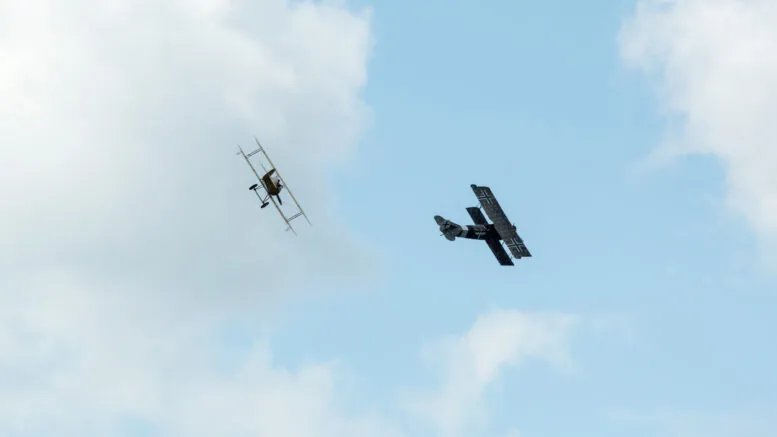
WWI transformed air combat, leading to the design of powerful fighter planes, including the Fokker D.VII. Known for its stability, power, and maneuverability, this aircraft gave German pilots a major advantage in the sky. It left a lasting legacy that transformed future fighter aircraft. Museums and airshows give you a chance to experience its place in aviation history and dive deeper into its impact.
When we think about World War I, images of muddy trenches and battles on the ground are usually what come to mind. But the war was also taking place in the sky, with courageous pilots maneuvering unpredictable, fragile aircraft. Aerial combat was as real as the need for a superior fighter jet.
The Fokker D.VII was the answer. Let’s explore its role in WWI air combat and how it changed everything.
The Beginning of Aerial Combat
When WWI started, airplanes were used for reconnaissance, with pilots flying over enemy lines to gather information. What happened next, however, was not expected. Both sides began to realize the potential of aircraft in the war that extended far beyond collecting data: combat.
It didn’t take long for aircraft to be armed and for dogfights to become common in this war.
When aerial combat began, there was a demand for aircraft capable of outperforming the enemy. It needed to have speed, maneuverability, firepower, and clear visibility for the pilot. And, by 1918, Germany had surpassed expectations with one of the most respected fighter planes of WWI: the Fokker D.VII.
The Debut of the Fokker D.VII
The Fokker D.VII was designed by Reinhold Platz and built by the Fokker-Flugzeugwerke company. And upon its entrance into the war, it quickly gained a reputation as one of the best fighter aircraft.
Of all the airplanes that came before it, none were like the Fokker D.VII. It was designed with intention, maintaining the goals of power, performance, and pilot control at every turn. This aircraft was not just fast; it was also stable, responsive, and forgiving in ways that many others weren’t. When an experienced pilot was in control, the Fokker D.VII was deadly. And, because of its manageability, it also became a great tool for allowing pilots to develop their skills. So, when the call came, they would be ready.
There is no denying that the introduction of this aircraft gave the Germans a significant advantage in aerial combat.
What Set the Fokker D.VII Apart From Others?
What exactly was it about the Fokker D.VII that made it so effective in the war? How was it different from other fighter planes of its time? It all comes down to a couple of key points using smart engineering and practical design.
Exceptional Handling
Perhaps one of the most praised features of the Fokker D.VII was its handling. Aircraft during this era were very unstable and unpredictable. But not this one. The new fighter jet was stable in flight, allowing pilots to maintain control at the highest altitudes or the lowest speeds. Saying this was an advantage during WWI dogfights is an understatement.
The Fokker D.VII did have a unique ability to sort of hang in the air while climbing. This made it easy for pilots to fire at opponents from below. No other aircraft at the time could match this.
Strong Climb Performance
One of its strong points was that it excelled at climbing quickly. Pilots were able to gain altitude faster than any other enemy aircraft. In aerial combat, it meant the difference between winning and losing as it increased visibility and allowed more control in the fight.
Durable Construction
In a time when aircraft were known for being fragile, the Fokker D.VII was known for its durability. It was designed with a welded steel tube fuselage, which made it much stronger than wood-framed planes. And it made it better able to withstand the stresses of combat. What’s more, it gave pilots a boost of confidence in the air.
Armament
Aerial combat would not have been complete without armament. That’s why the Fokker D.VII was equipped with twin synchronized machine guns. It provided reliable and effective firepower to use when engaging with the enemy. And, to make it easy to handle, the synchronized gear allowed the guns to fire through the propeller arc without damaging it. This was an essential part of WWI fighter aircraft.
Why Pilots Loved the Fokker D.VII
The Fokker D.VII was not just a tool used in war; it was an aircraft loved by pilots of all levels. They welcomed the opportunity to fly such a legend because it offered a sense of control and predictability that was unmatched.
One wrong move in most planes could send the pilot into a tailspin or stall. They were hard to control and completely unforgiving. But the Fokker D.VII was more stable and much easier to handle, regardless of how challenging the situation was. This allowed pilots to focus more on war tactics and less on just trying to survive.
For experienced pilots, the aircraft was a powerful weapon. For newer pilots, it meant having a greater chance of survival.
The Fokker D.VII Today
The Fokker D.VII was a success in aerial combat, and it set the precedent for new fighter aircraft when the war ended. Engineers were able to take note of what had worked and what hadn’t. And they used that to develop more advanced fighters that would continue to emerge for years to come. Most importantly, it taught that fighter jets aren’t only about fighting, but also about balance, control, and adaptability.
Over a century later, the Fokker D.VII remains an icon in aviation history. Aviation enthusiasts welcome the chance to see replicas and restored versions at airshows, as well as hear the stories from veterans about the courage, skill, and determination of those who flew them.
Experience Aviation History at Wings Over Camarillo
Learning about the Fokker D.VII captures what aviation is all about. And it changed the course of aerial combat, leaving a permanent mark on history. But why just read about combat aircraft when you can experience it for yourself? Join us at Wings Over Camarillo Air Show this August. Mark your calendars, as tickets will be on sale soon!
Ready to Soar with Us?