
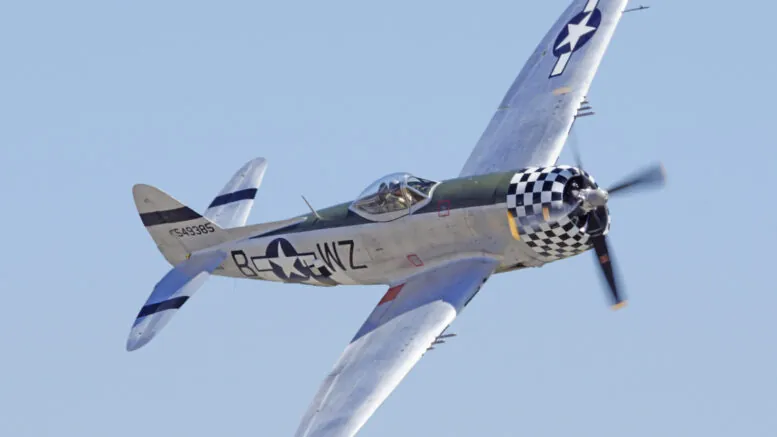
When discussing the heavily armored powerhouses of World War II, one aircraft commands absolute respect from historians and warbird fans alike. The Republic P47 Thunderbolt stood out as an engineering marvel designed for raw strength, durability, and high-altitude escort capability. Often overshadowed by sleek fighters like the P-51 Mustang, this massive warplane carved out its own unique, unbeatable legacy across the European and Pacific theaters.
Whether you are a seasoned airshow spectator or just beginning to explore military history, understanding the sheer engineering scope of this single-engine monster offers a captivating look into aviation evolution. Here are the essential facts about the P 47 thunderbolt fighter that every aviation enthusiast should understand.
It Was the Heaviest Single-Engine Fighter of Its Era
The size of the P-47 thunderbolt aircraft often shocked pilot trainees who were used to smaller trainers. Fully loaded with fuel, ammunition, and external ordnance, the aircraft could weigh as much as 17,500 pounds. To put that into perspective, that made it nearly twice as heavy as the British Spitfire or the German Messerschmitt Bf 109.
Despite this immense weight, the airplane was far from sluggish. Its size earned it the affectionately bestowed nickname “The Jug,” short for Juggernaut. Pilots quickly realized that what the plane lacked in tight dogfighting agility, it made up for in immense dive speed and structural toughness.
A Radial Engine Superhouse Powered the Beast
At the heart of every P 47 thunderbolt was the massive 18-cylinder Pratt & Whitney R-2800 Double Wasp radial engine. Generating over 2,000 horsepower in early models and boosted even higher in later variants, this powerplant gave the heavy fighter incredible thrust.
To handle high-altitude combat, engineers routed complex ductwork through the fuselage to power a massive turbosupercharger located near the tail. This innovative system allowed the P 47 thunderbolt plane to retain its impressive engine performance up to 30,000 feet, providing Allied bombers with reliable protection over occupied Europe.
If you enjoy seeing legendary engines and restored aircraft in person, visiting static displays at regional events like the annual Wings Over Camarillo Airshow offers a front-row seat to the surviving mechanical wonders of WWII aviation.
Unmatched Ground-Attack Firepower
While initially designed as a high-altitude interceptor, the P-47 thunderbolt found its true calling as a ground-attack fighter-bomber. Equipped with eight .50-caliber Browning M2 machine guns mounted four to each wing, the aircraft possessed devastating strafing power.
Later modifications allowed the plane to carry up to 2,500 pounds of bombs or ten 5-inch rockets under its wings. Ground troops relied heavily on these aircraft during close air support missions across Western Europe. They targeted enemy transport columns, supply depots, artillery positions, and armored vehicles with surgical precision.
Exceptional Production Numbers and Combat Statistics
The sheer scale of manufacturing during World War II remains one of the most astounding feats in industrial history. A key statistic that highlights the strategic importance of this fighter is that Republic Aviation and its licensees built a total of 15,636 units between 1941 and 1945. This makes it the most produced American fighter aircraft in history.
Over the course of the war, pilots flying these rugged machines completed over 546,000 sorties. They claimed more than 3,700 enemy aircraft shot down in aerial combat while destroying over 86,000 railway cars, 9,000 locomotives, and 6,000 armored vehicles on the ground.
Built Like an Armored Tank in the Sky
Survivability was perhaps the hallmark feature of the P 47 thunderbolt fighter. The aircraft featured heavy cockpit armor plating, bullet-resistant windscreens, and self-sealing fuel tanks. Its air-cooled radial engine could sustain multiple hits from anti-aircraft fire and keep running, unlike liquid-cooled engines that would fail quickly after a single coolant leak.
Countless stories exist of pilots flying their battered planes back to allied airfields with massive holes in the wings, missing cylinder heads, or torn control surfaces. This durability built deep trust between aircrews and their machines.
Prominent combat groups, including the famous Tuskegee Airmen, flew these heavy fighters extensively before transitioning to other platforms. To learn more about how different historical groups utilized these aircraft, explore our guide on the Tuskegee Airmen Planes featured throughout WWII history.
The Evolution to Bubble Canopies
Early models of the aircraft featured a “razorback” fuselage design, where the structure sloped upward behind the pilot cockpit. While this design was structurally sound, it restricted rearward visibility during dogfights.
To fix this issue, engineers introduced the bubble canopy starting with the P-47 D-25 variant. Borrowed from British designs, this clear, teardrop canopy gave pilots an unobstructed 360-degree view of the skies around them. This improvement significantly enhanced situational awareness in combat and became a signature visual trait for late-war Allied fighters.
Experience Legendary Warbirds Live
Reading about aviation history brings these machines to life, but nothing compares to hearing the roar of a vintage radial engine on the tarmac. Preserving the heritage of military and civilian flight is central to the mission of aviation enthusiasts and historians everywhere.
If you are eager to get close to classic warbirds, witness thrilling aerobatic performances, and explore interactive STEM exhibits, plan your next family outing with Wings Over Camarillo. You can check out our latest event details, browse Airshow Ticket Options, or learn about upcoming schedules by visiting our main event page today.
Whether you are admiring historic fighters from the ground or watching dynamic flight demonstrations, honoring the legacy of aircraft like the Thunderbolt ensures these historical treasures continue to inspire future generations.
Ready to Soar with Us?