
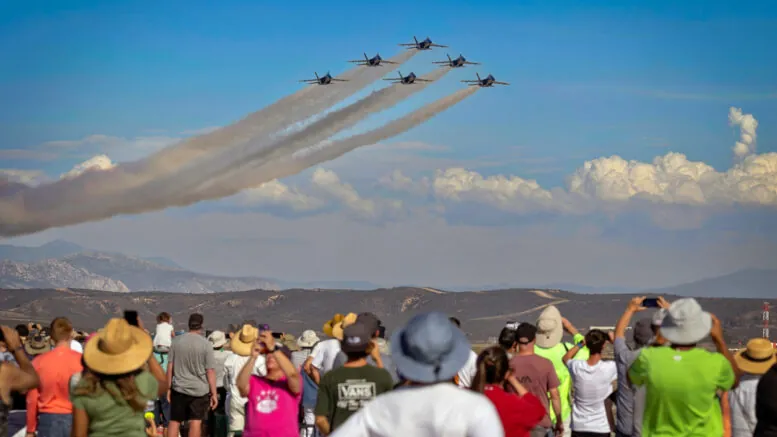
There is a distinct magic that takes over the airfield when the distant roar of a reciprocating engine or the sharp whine of a jet turbine fills the air. For aviation enthusiasts, families, and curious first-timers alike, attending an air show is an immersive sensory experience. Looking up at the open sky to witness high-performance maneuvers creates a powerful connection to human ingenuity and history.
But what exactly are you looking at when these birds take flight? The aircraft that grace the flight line are far from uniform. They represent different eras of design, varying philosophies of flight, and distinct structural builds optimized for their specific roles. Whether you are walking the ramp or watching an aerial demonstration from the grass, understanding the different categories of aircraft enhances your appreciation of the skills on display.
Below, we break down the primary types of aircraft that make up a classic air show lineup, exploring what makes each category unique and why they continue to captivate audiences.
The Masters of Agility: Custom Aerobatic Stunt Planes
When people think of high-energy maneuvers, like vertical climbs, snap rolls, and tumbling passes that seem to defy the laws of physics, they are usually picturing purpose-built aerobatic stunt planes. These are not modified versions of standard commuter aircraft; they are high-performance machines engineered specifically for extreme stresses.
Unlike standard general aviation aircraft, an aerobatic airshow plane is built to withstand immense forces, often rated for structural loads exceeding plus or minus 10 Gs. To put that in perspective, a standard commercial airliner rarely experiences more than 1.5 Gs during a typical flight. The power-to-weight ratio of these modern marvels allows them to accelerate straight up into the clouds without losing speed.
Aircraft like the Extra 330SC, the Pitts Special, and the Sukhoi Su-26 are common fixtures in this category. They typically feature lightweight composite materials or high-strength steel tubing fabric structures, paired with oversized control surfaces. The massive ailerons and elevators give the pilot instantaneous control, allowing for crisp, sudden directional changes. When you see a pilot drawing complex patterns with smoke trails across the sky, you are witnessing the pinnacle of mechanical agility and pilot precision.
Living History: Legendary Warbirds
For many spectators, the true heart of an air show rests in the deep, rumbling growl of vintage military aircraft, affectionately known as “warbirds.” These planes are living museums, meticulously maintained by dedicated crews and historical groups to ensure that the stories of past generations are never forgotten.
The term warbird spans multiple generations of military history, but the aircraft from World War II tend to draw the largest crowds. The distinctive silhouette of a North American P-51 Mustang, the unique gull-wing design of a Vought F4U Corsair, or the unmistakable profile of a Supermarine Spitfire evoke a powerful sense of nostalgia and reverence. According to historical estimates from aviation preservation groups, out of the tens of thousands of fighter planes manufactured during the 1940s, fewer than 1% remain in airworthy condition today. This statistical scarcity makes every public flight an extraordinary historical event.
Watching a warbird perform a high-speed vintage flyby provides a tangible look at the engineering leaps made during wartime. These planes relied on massive, supercharged piston engines like the famous Rolls-Royce Merlin or the Pratt & Whitney Double Wasp radial engine to achieve speeds and altitudes previously thought impossible. Hearing the mechanical symphony of these classic airshow planes gives audiences a visceral connection to history that textbooks simply cannot replicate.
The Heavy Lifters and Transport Legends
While fighter planes and agile stunt ships get a lot of the glory, no air show is complete without the majestic presence of transport and utility aircraft. These are the giants of the sky, demonstrating that size and grace can coexist in harmony.
A prime example of this category is the Douglas DC-3, a revolutionary aircraft that completely transformed commercial aviation and military logistics alike when it debuted in the 1930s. Known as the C-47 Skytrain during its military service in World War II, this twin-engine transport plane was praised by commanders as one of the most vital pieces of equipment for securing victory. Its rugged design allowed it to operate out of unpaved, short runways, carrying troops, cargo, and wounded soldiers wherever they were needed most.
When a large transport plane flies over the crowd line, its presence is commanding. The slow, deliberate pass highlights the lift generation capabilities of its massive wingspan. Seeing these iconic transports alongside nimble stunt planes reminds us of the sheer diversity of aviation design and the distinct roles these machines have played in shaping our global landscape.
Precision and Power: Modern Military Demonstrations
On the opposite end of the historical spectrum are the cutting-edge marvels of modern military aviation. While civilian performers show what can be done with lightweight agility, tactical military demonstrations showcase raw power, advanced aerodynamics, and tactical capabilities.
Modern fighter jets, such as the F-22 Raptor, the F-35 Lightning II, or the classic F/A-18 Super Hornet, rely on advanced fly-by-wire computer systems and powerful afterburning turbofan engines to achieve incredible performance metrics. When these jets perform a high-speed pass, they often approach the speed of sound, creating a wall of sound that shakes the ground beneath your feet.
What makes these military demonstrations so captivating is the juxtaposition of high speed and slow-flight control. You might witness a jet blast past at near-supersonic speeds, only to pitch up into a high-angle-of-attack slow pass, hanging in the air seemingly by sheer engine thrust alone. These maneuvers demonstrate the extreme flight envelopes required for modern aerial defense, leaving spectators in absolute awe of contemporary engineering.
Making the Most of Your Flight Line Experience
When you attend an event to see these incredible airshow planes in action, taking a look at the static displays on the ground is just as valuable as watching the aerial performances. The static ramp allows you to walk up to these historic and high-tech machines, look into the cockpits, and speak directly with the pilots and mechanics who keep them flying.
Every scratch on a vintage warbird’s cowl tells a story, and every specialized aerodynamic spade on an aerobatic plane’s wing reveals a design secret. By understanding the engineering and history behind each category of aircraft, you transform a beautiful afternoon of entertainment into a deep exploration of human achievement. The next time you see an airshow plane banking hard against the horizon, you will know exactly what makes that moment possible. Check out an airshow near you!
Ready to Soar with Us?